




Can cylinder shape magnets be used in magnetic sensors for automotive applications?
 May 15, 2025|
 As a supplier of cylinder shape magnets, I am often asked about the potential applications of our products, especially in the automotive industry. In this blog post, I will explore the question: Can cylinder shape magnets be used in magnetic sensors for automotive applications?

Understanding Magnetic Sensors in Automotive Applications
Magnetic sensors play a crucial role in modern automotive systems. They are used for a variety of functions, including speed sensing, position sensing, and current sensing. These sensors rely on the interaction between a magnetic field and a sensing element to detect changes in the environment and convert them into electrical signals.
For example, in an anti - lock braking system (ABS), magnetic sensors are used to measure the rotational speed of the wheels. By continuously monitoring the wheel speed, the ABS can prevent the wheels from locking up during braking, improving vehicle safety. Similarly, in electric power steering systems, magnetic sensors are used to detect the position of the steering wheel, enabling precise control of the steering assistance.
Advantages of Cylinder Shape Magnets for Magnetic Sensors
- Uniform Magnetic Field Distribution
Cylinder shape magnets can provide a relatively uniform magnetic field in a specific direction. This is important for magnetic sensors because a consistent magnetic field allows for more accurate and reliable sensing. The cylindrical shape ensures that the magnetic flux lines are evenly distributed around the magnet, reducing the likelihood of measurement errors due to magnetic field variations. - Ease of Installation
The simple and regular shape of cylinder magnets makes them easy to install in automotive sensor assemblies. They can be easily integrated into small and complex sensor designs, fitting into pre - designed housing or mounting structures without the need for extensive modification. This ease of installation can reduce manufacturing costs and assembly time. - High Magnetic Strength
Cylinder shape magnets, especially those made from high - performance materials such as neodymium, can have a high magnetic strength. This is beneficial for magnetic sensors as it allows for a stronger magnetic field to interact with the sensing element, increasing the sensitivity and signal - to - noise ratio of the sensor. A stronger magnetic field can also enable the sensor to operate over a longer distance or in more challenging environments.
Types of Cylinder Shape Magnets Suitable for Automotive Magnetic Sensors
- Cylindrical Permanent Magnet
Cylindrical Permanent Magnet is a popular choice for automotive magnetic sensors. These magnets are made from materials like neodymium iron boron (NdFeB), samarium cobalt (SmCo), or ferrite. NdFeB magnets, in particular, offer high magnetic energy density, which means they can produce a strong magnetic field in a relatively small size. This is ideal for automotive applications where space is often limited. - Hollow Cylinder Magnets
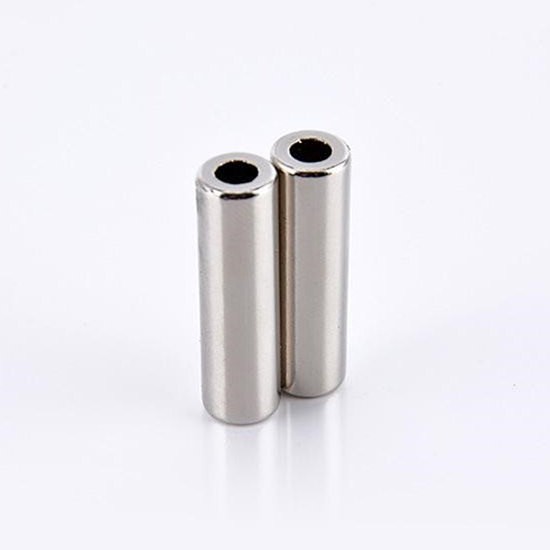
Hollow Cylinder Magnets can also be used in certain automotive magnetic sensor designs. The hollow center allows for the passage of other components, such as wires or shafts, which can be useful for integrating the magnet into a more complex sensor system. For example, in a sensor that measures the position of a rotating shaft, a hollow cylinder magnet can be placed around the shaft, providing a magnetic field for the sensing element while allowing the shaft to rotate freely. - Small Cylindrical Magnets
Small Cylindrical Magnets are suitable for applications where a compact sensor design is required. These magnets can be used in micro - sensors or in areas where space is extremely limited. Their small size does not necessarily mean a weak magnetic field, as high - performance materials can still be used to achieve the necessary magnetic strength.
Challenges and Considerations
- Temperature Stability
Automotive environments can be subject to significant temperature variations. High temperatures can cause a reduction in the magnetic strength of the magnet, which can affect the performance of the magnetic sensor. Therefore, it is important to choose cylinder shape magnets with good temperature stability. For example, samarium cobalt magnets have better temperature resistance compared to neodymium magnets, although they may have a lower magnetic energy density. - Vibration and Shock Resistance
Vehicles are subject to vibrations and shocks during normal operation. Cylinder shape magnets used in automotive magnetic sensors need to be able to withstand these mechanical stresses without losing their magnetic properties or becoming dislodged from the sensor assembly. Proper mounting and encapsulation techniques can help to ensure the reliability of the magnets in such environments. - Corrosion Resistance
Automotive environments can also expose the magnets to moisture, chemicals, and other corrosive substances. Corrosion can damage the magnet and reduce its magnetic strength over time. Coating the cylinder shape magnets with a protective layer, such as nickel - copper - nickel plating, can improve their corrosion resistance.
Case Studies
- Wheel Speed Sensors
In many modern vehicles, cylinder shape magnets are used in wheel speed sensors. These sensors are part of the ABS and traction control systems. The magnet is typically mounted on the wheel hub, and as the wheel rotates, the changing magnetic field is detected by a sensing element. The uniform magnetic field provided by the cylinder magnet ensures accurate speed measurement, which is essential for the proper functioning of the safety systems. - Throttle Position Sensors
Cylinder shape magnets can also be used in throttle position sensors. These sensors are used to measure the position of the throttle valve in the engine. The magnet is attached to the throttle shaft, and as the shaft rotates, the magnetic field changes, which is detected by the sensor. The high magnetic strength and ease of installation of cylinder magnets make them a suitable choice for this application.
Conclusion
In conclusion, cylinder shape magnets can indeed be used in magnetic sensors for automotive applications. Their uniform magnetic field distribution, ease of installation, and high magnetic strength make them well - suited for a variety of sensing functions in vehicles. However, challenges such as temperature stability, vibration and shock resistance, and corrosion resistance need to be carefully considered.
If you are in the automotive industry and are looking for high - quality cylinder shape magnets for your magnetic sensor applications, I encourage you to contact us for further discussion and potential procurement. We have a wide range of cylinder shape magnets, including Cylindrical Permanent Magnet, Hollow Cylinder Magnets, and Small Cylindrical Magnets, which can be customized to meet your specific requirements.
References
- "Magnetic Sensors in Automotive Applications" - A research paper on the use of magnetic sensors in the automotive industry.
- "Properties and Applications of Cylindrical Magnets" - A technical document discussing the characteristics and potential uses of cylindrical magnets.
- "Automotive Electronics Handbook" - A comprehensive guide to automotive electronic systems, including magnetic sensor technology.