




Can ring magnets be used in magnetic resonance imaging (MRI)?
 Aug 12, 2025|
 Hey there! As a supplier of ring magnets, I often get asked all sorts of questions about where and how our products can be used. One of the most interesting inquiries I've received lately is whether ring magnets can be used in magnetic resonance imaging (MRI). So, let's dive right into this topic and see what we can find out.
First off, let's understand what MRI is all about. MRI is a powerful medical imaging technique that uses a strong magnetic field and radio waves to generate detailed images of the inside of the body. It's super useful for diagnosing a wide range of conditions, from injuries to diseases. The key component of an MRI machine is, of course, the magnet. This magnet creates a uniform magnetic field that aligns the hydrogen nuclei in our body's water molecules. Then, radio waves are used to disrupt this alignment, and when the nuclei return to their original state, they emit signals that are detected and used to create the images.
Now, let's talk about ring magnets. We offer a variety of ring magnets, like the Magnet Source Neodymium Magnet Ring, Diametrically Magnetized Ring Magnet, and Super Magnetic Ring. These magnets come in different sizes, strengths, and magnetization patterns, which makes them suitable for a wide range of applications.
So, can we use these ring magnets in MRI? Well, it's not that simple. MRI machines require extremely strong and uniform magnetic fields. The magnets used in commercial MRI systems are usually superconducting magnets. These magnets are cooled to very low temperatures using liquid helium, which allows them to conduct electricity with zero resistance and generate incredibly strong and stable magnetic fields.
Our ring magnets, on the other hand, are typically made of neodymium or other magnetic materials. While they can be quite strong, they might not be able to provide the level of uniformity and strength required for a full - scale MRI machine. The magnetic field of a ring magnet can vary depending on its size, shape, and magnetization pattern. In an MRI, even a small variation in the magnetic field can lead to artifacts in the images, which can make it difficult for doctors to accurately diagnose a condition.
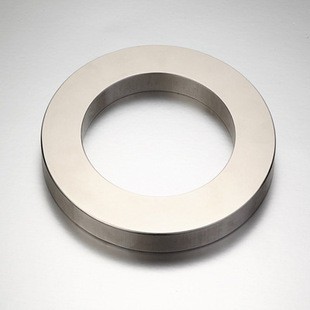

However, that doesn't mean there's no potential use for ring magnets in the context of MRI. There are some smaller - scale or experimental MRI setups where ring magnets could potentially play a role. For example, in research labs, they might be used in the development of new MRI techniques or in the construction of smaller, portable MRI devices. These devices could be used in point - of - care settings or for specialized applications where a full - sized MRI machine is not practical.
Another area where ring magnets could be useful is in the development of MRI - compatible tools. Some surgical instruments or other medical devices need to be MRI - compatible, meaning they don't interfere with the MRI's magnetic field. Ring magnets could be used in the design of these tools, as long as they are carefully engineered to have the right magnetic properties.
Let's take a closer look at the properties of our ring magnets. The Magnet Source Neodymium Magnet Ring is known for its high magnetic strength. Neodymium is one of the strongest magnetic materials available, so these rings can generate a relatively strong magnetic field. But again, the challenge is to make this field uniform enough for MRI applications.
The Diametrically Magnetized Ring Magnet has a unique magnetization pattern. This pattern can be useful in certain experimental setups where a specific magnetic field distribution is required. For example, it could be used to create a more focused magnetic field in a particular area, which might be beneficial in some research - based MRI applications.
The Super Magnetic Ring is designed to have enhanced magnetic properties. It could potentially be used in combination with other magnetic components to create a more complex magnetic field that might be closer to what's needed for an MRI - related application.
If you're a researcher or a developer working on MRI - related projects, we'd love to have a chat with you. We can provide samples of our ring magnets so you can test them in your setups. We understand that every project is unique, and we're willing to work with you to customize the magnets to meet your specific requirements. Whether you need a different size, magnetization pattern, or strength, we have the expertise and the manufacturing capabilities to make it happen.
In conclusion, while our ring magnets might not be suitable for large - scale, commercial MRI machines right off the bat, there are definitely potential niche applications in the MRI field. If you're exploring new frontiers in MRI technology or looking for MRI - compatible components, don't hesitate to reach out to us. We're here to support your innovation and help you bring your ideas to life.
References
- Bushberg, J. T., Seibert, J. A., Leidholdt, E. M., & Boone, J. M. (2012). The essential physics of medical imaging. Lippincott Williams & Wilkins.
- Schenck, J. F. (1996). The role of magnetic susceptibility in magnetic resonance imaging: MRI magnetic compatibility of the first and second kinds. Medical physics, 23(6), 815 - 850.