




How do cylinder shape magnets work?
 Nov 18, 2025|
 Hey there! As a supplier of Cylinder Shape Magnets, I often get asked about how these cool little things work. So, I thought I'd take a few minutes to break it down for you in a way that's easy to understand.
First off, let's talk about what a cylinder shape magnet is. It's exactly what it sounds like - a magnet in the shape of a cylinder. These magnets come in all sorts of sizes, from tiny ones you can hold between your fingers to big ones that can be used in industrial applications. And they're made from different materials, like neodymium, ferrite, and samarium cobalt, each with its own unique properties.
Now, let's get into the nitty - gritty of how they work. At the most basic level, magnets work because of something called magnetism. Magnetism is a force that can attract or repel certain materials, mainly metals like iron, nickel, and cobalt. But how does this force come about?
It all starts at the atomic level. Inside an atom, there are tiny particles called electrons. These electrons spin around the nucleus of the atom, and this spinning creates a small magnetic field. In most materials, the magnetic fields of individual atoms cancel each other out, so the material as a whole isn't magnetic. But in a magnet, the atoms are arranged in such a way that their magnetic fields line up, creating a net magnetic field.
In a cylinder shape magnet, this magnetic field has two poles - a north pole and a south pole. You've probably seen this in action with a simple bar magnet. Opposite poles attract each other, while like poles repel. So, if you bring the north pole of one cylinder shape magnet close to the south pole of another, they'll stick together. But if you try to bring two north poles or two south poles together, they'll push each other away.
The strength of a cylinder shape magnet's magnetic field depends on a few factors. One of the most important is the material it's made from. For example, neodymium magnets are known for being incredibly strong. They're made from an alloy of neodymium, iron, and boron, and they can have a very high magnetic field strength. This makes them great for applications where you need a lot of magnetic force, like in electric motors or hard disk drives.
Another factor that affects the strength of the magnetic field is the size of the magnet. Generally speaking, the bigger the magnet, the stronger the magnetic field. However, it's not just about the physical size. The shape of the magnet also plays a role. A cylinder shape magnet has a unique magnetic field distribution compared to other shapes. The magnetic field lines are concentrated at the poles, and they form a sort of loop around the magnet.

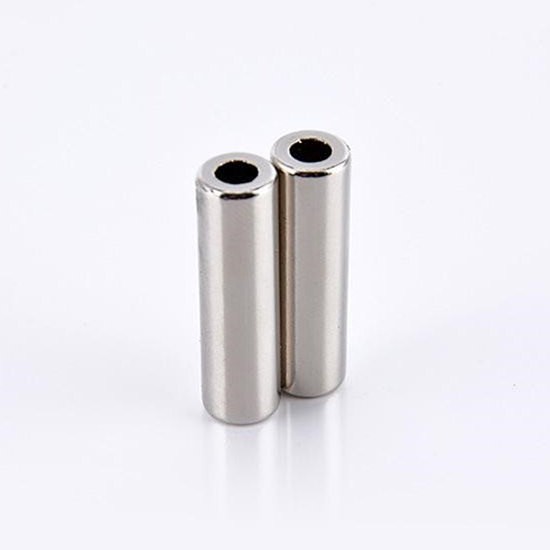
So, what are some common applications of cylinder shape magnets? Well, there are tons! In the automotive industry, they're used in sensors to detect the position of various components. For example, a cylinder shape magnet might be used in a wheel speed sensor to help the anti - lock braking system work properly.
In the medical field, these magnets are used in MRI machines. The strong magnetic field of the cylinder shape magnets helps to create detailed images of the inside of the body. And in consumer electronics, they're used in speakers to convert electrical signals into sound.
If you're interested in different types of cylinder shape magnets, we have some great options on our website. Check out our Hollow Cylinder Magnets and Magnet Cylindrical pages. These magnets have unique properties that make them suitable for specific applications. And of course, our main Cylinder Shape Magnet page has all the information you need about our standard offerings.
Now, let's talk about how we make these cylinder shape magnets. The manufacturing process usually starts with the raw materials. For neodymium magnets, we take the neodymium, iron, and boron and melt them together in a furnace. Then, we use a process called powder metallurgy. The molten alloy is cooled and crushed into a fine powder. This powder is then pressed into the desired cylinder shape under high pressure.
After pressing, the magnet is sintered, which means it's heated to a high temperature in a controlled atmosphere. This helps to densify the magnet and improve its magnetic properties. Finally, the magnet is magnetized by exposing it to a strong magnetic field.
Quality control is a big deal for us. We test every magnet to make sure it meets our strict standards. We measure the magnetic field strength, the dimensions, and other important properties. This way, you can be confident that you're getting a high - quality product.
If you're in the market for cylinder shape magnets, whether it's for a small DIY project or a large - scale industrial application, we're here to help. We can provide you with the right magnet for your needs, and we offer competitive prices and great customer service.
Whether you're an engineer looking for a reliable magnet for your new design or a hobbyist working on a fun project, we've got you covered. Just reach out to us, and we can start discussing your requirements. We'll work with you to find the perfect cylinder shape magnet solution.
In conclusion, cylinder shape magnets are fascinating little objects with a wide range of applications. Their unique shape and magnetic properties make them useful in many different industries. And as a supplier, we're committed to providing you with the best products and services. So, if you have any questions or if you're ready to place an order, don't hesitate to get in touch.
References
- "Magnetism and Magnetic Materials" by David Jiles
- "Handbook of Magnetic Materials" edited by Klaus H. J. Buschow