




How does a speaker magnet affect the stereo imaging?
 Dec 10, 2025|
 Hey there! As a supplier of speaker magnets, I've spent a fair amount of time diving into the nitty - gritty of how these little powerhouses impact stereo imaging. So, let's chat about how a speaker magnet affects the stereo imaging and why it's a big deal in the audio world.

First off, what is stereo imaging anyway? Well, it's like creating a soundstage. Imagine you're at a live concert, and you can tell exactly where each instrument is placed on the stage just by listening. That's the kind of immersive experience stereo imaging aims to recreate in your home audio setup. It's all about making the sound seem like it's coming from distinct points in space, rather than just from two speakers out front.
Now, let's get into the role of the speaker magnet. The speaker magnet is the heart of the speaker's motor system. When an electrical current passes through the voice coil, it creates a magnetic field that interacts with the fixed magnetic field of the speaker magnet. This interaction causes the voice coil, and attached to it, the speaker cone, to move back and forth, producing sound waves.
One of the key factors is the strength of the magnet. A stronger magnet can deliver more precise control over the movement of the voice coil. When the magnet provides a robust and stable magnetic field, the voice coil can respond more accurately to the electrical signals. This means that the speaker cone can reproduce the audio signal with greater fidelity. For instance, if you're listening to a complex piece of music with multiple instruments playing simultaneously, a powerful magnet helps each instrument's sound to be reproduced clearly and separately. Without that accuracy, the sounds can blend together, muddying the stereo image.
Think about it like this: if you're trying to draw a detailed picture, you need a good quality pen. The magnet is like that pen for the speaker. A weak magnet is like a dull pen that smudges the lines, while a strong magnet allows for sharp, well - defined strokes.
The size and shape of the magnet also play crucial roles. Different sizes and shapes can affect how the magnetic field is distributed around the voice coil. Some magnets are designed to have a more concentrated magnetic field, which can result in better control over the smaller, faster movements of the voice coil. This is particularly important for reproducing high - frequency sounds, as these require very rapid and precise movements of the speaker cone.
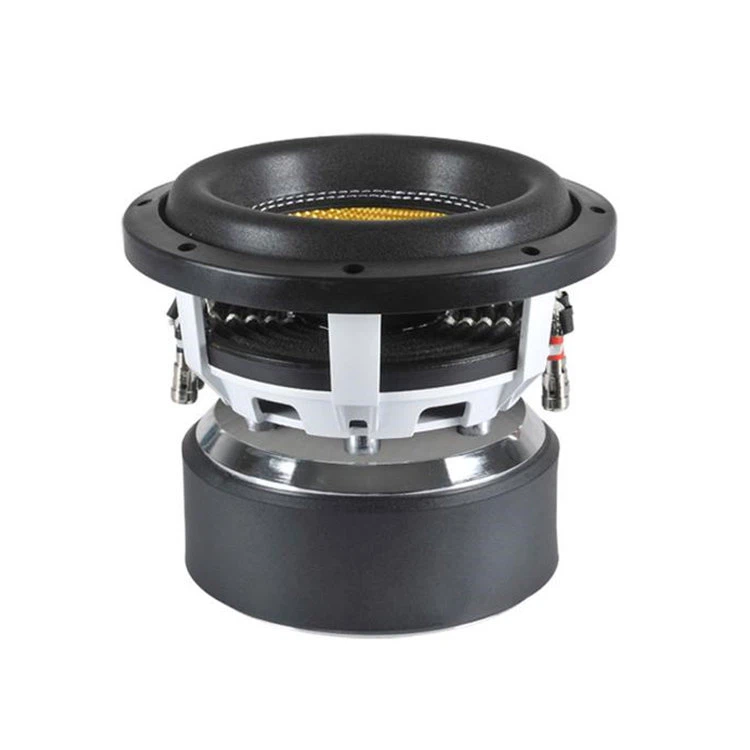
On the other hand, larger magnets can be beneficial for speakers that need to handle a lot of power, like Subwoofer Impulse Triple Magnet. Subwoofers are responsible for producing those deep, booming bass sounds. A larger magnet can provide the necessary force to move the large speaker cone used in subwoofers effectively, creating a more solid and well - defined bass. When the bass is tight and clear, it contributes to a more realistic and well - balanced stereo image. Otherwise, the bass can be overly muddy or undefined, throwing off the whole soundstage.
For mid - range speakers, like Woofer Magnet, the magnet's characteristics are carefully tuned to reproduce the frequencies that are the most common in human speech and a wide range of musical instruments. A well - designed magnet allows these speakers to accurately reproduce the nuances in the mid - range sounds, making the vocals and many instruments sound more natural and placed in the right position within the stereo image.
Let's talk about the materials used in the magnet. Different materials have different magnetic properties. For example, neodymium magnets are known for their incredibly high magnetic strength in a relatively small size. This makes them a popular choice for speakers where size is a constraint, but high performance is still required. Ferrite magnets, on the other hand, are more common and are often used in a wide range of speakers because they offer a good balance between cost and performance.
The magnetic material can affect the overall sound signature of the speaker and, in turn, the stereo imaging. A magnet made from a more stable and high - quality material can provide a more consistent magnetic field over time. This stability is crucial for maintaining the accuracy of the speaker's performance. If the magnetic field fluctuates, it can cause variations in the movement of the voice coil, leading to distortion and a degraded stereo image.
Now, let's consider the impact of the magnet on the overall speaker enclosure. The design of the enclosure and the magnet interact in interesting ways. A well - designed enclosure can enhance the speaker's performance, but the magnet also needs to be compatible with the enclosure design. For example, a large, powerful magnet might generate a lot of heat. If the speaker enclosure isn't designed to dissipate this heat properly, it can affect the performance of the magnet and, consequently, the stereo imaging.
When it comes to more specialized speakers, like 10 Inch Speaker Magnet, the magnet has to be carefully calibrated to work with the larger surface area of the speaker cone. A larger cone requires more force to move it accurately, but it also has the potential to reproduce a wider range of frequencies. The magnet needs to provide enough power to move the cone without sacrificing precision.
In a multi - speaker audio system, each speaker's magnet contributes to the overall stereo imaging. The left and right speakers need to work in harmony to create a convincing soundstage. If one speaker has a magnet that isn't performing as well as the other, it can throw off the balance of the stereo image. For example, if the left speaker's magnet is causing the speaker to produce sounds slightly out of phase with the right speaker, it can make the imaging seem off - center.
As a speaker magnet supplier, I understand how important it is to ensure that our magnets meet the highest standards. We conduct rigorous testing to make sure that each magnet provides a stable, strong magnetic field that allows speakers to reproduce audio with the best possible stereo imaging.
If you're in the business of making speakers or you're an audio enthusiast looking to upgrade your speakers, we've got the right speaker magnets for you. Our magnets are designed to enhance the stereo imaging and overall sound quality of your speakers. Whether you need a magnet for a small bookshelf speaker or a large subwoofer, we've got a solution.
If you're interested in learning more or want to discuss a potential purchase, don't hesitate to reach out. We're here to help you get the most out of your audio setup with our high - quality speaker magnets.
References
- Physics of Audio Systems textbooks
- Industry - specific research papers on speaker design and magnet technology
- Audio engineering journals