




How to magnetize a cylindrical magnet?
 Jan 21, 2026|
 How to Magnetize a Cylindrical Magnet
Cylindrical magnets are ubiquitous in our modern world, finding applications in various industries such as electronics, automotive, and manufacturing. As a reliable cylindrical magnet supplier, we often encounter customers who are curious about the magnetization process. In this blog post, we will delve into the science behind magnetizing a cylindrical magnet and share some practical methods that can be employed.
To understand how to magnetize a cylindrical magnet, it is essential to first grasp the basic principles of magnetism. Magnets possess a magnetic field, which is generated by the alignment of tiny magnetic domains within the material. In an unmagnetized state, these domains are randomly oriented, resulting in a net magnetic field of zero. However, when the material is subjected to an external magnetic field, the domains begin to align in the direction of the field, creating a net magnetic effect.
One of the most common methods for magnetizing a cylindrical magnet is through the use of a solenoid. A solenoid is a coil of wire that produces a magnetic field when an electric current passes through it. To magnetize a cylindrical magnet using a solenoid, the magnet is placed inside the coil, and a large current is passed through the wire. The magnetic field generated by the solenoid aligns the magnetic domains within the magnet, causing it to become magnetized.
The strength of the magnetic field required to magnetize a cylindrical magnet depends on several factors, including the material of the magnet, its size, and the shape of the magnet. For example, neodymium magnets, which are known for their high magnetic strength, require a stronger magnetic field to become magnetized compared to other types of magnets. Additionally, larger magnets generally require a more powerful magnetic field than smaller ones.
When using a solenoid to magnetize a cylindrical magnet, it is important to ensure that the magnet is properly aligned within the coil. The magnetic field produced by the solenoid is strongest at the center of the coil, so the magnet should be placed as close to the center as possible. It is also important to use a solenoid that is large enough to accommodate the magnet, as a smaller solenoid may not produce a strong enough magnetic field to magnetize the magnet effectively.

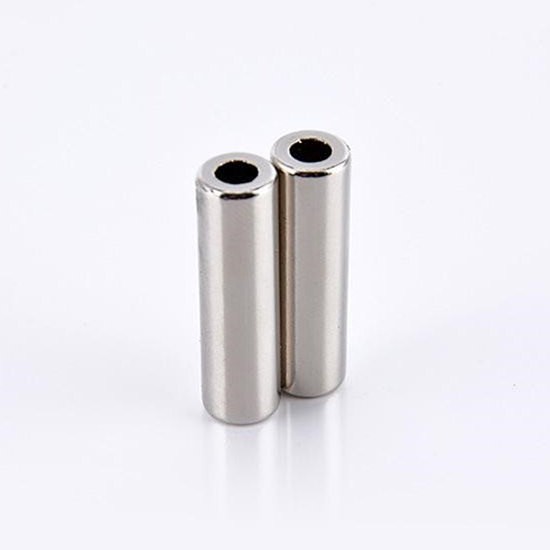
Another method for magnetizing a cylindrical magnet is through the use of a permanent magnet. This method involves bringing a strong permanent magnet into contact with the cylindrical magnet and then slowly moving it along the length of the magnet. As the permanent magnet moves, its magnetic field aligns the magnetic domains within the cylindrical magnet, causing it to become magnetized.
This method is relatively simple and does not require any specialized equipment. However, it may not be as effective as using a solenoid, especially for larger or more powerful magnets. Additionally, it can be difficult to control the strength and direction of the magnetic field produced by the permanent magnet, which may result in an uneven magnetization of the cylindrical magnet.
In some cases, it may be necessary to magnetize a cylindrical magnet in a specific direction. This can be achieved by using a solenoid or permanent magnet that is designed to produce a magnetic field in the desired direction. For example, if the cylindrical magnet needs to be magnetized along its axis, a solenoid can be used that is wound in the same direction as the axis of the magnet.
As a leading supplier of Cylindrical Permanent Magnet, Hollow Cylinder Magnets, and Small Cylindrical Magnets, we understand the importance of providing high-quality magnets that meet the specific needs of our customers. Whether you are looking for a standard cylindrical magnet or a custom-designed solution, we have the expertise and resources to deliver the perfect product for your application.
If you are interested in learning more about our cylindrical magnets or would like to discuss your specific requirements, please do not hesitate to contact us. Our team of experienced professionals is always ready to assist you and provide you with the information and support you need to make an informed decision. We look forward to the opportunity to work with you and help you find the ideal magnet for your project.
References
- "Magnetism and Electromagnetism" by David J. Griffiths
- "Handbook of Magnetism and Magnetic Materials" edited by Karl-Hermann Müller and Stuart Parkin
- "Magnetic Materials: Principles and Applications" by Eric C. Snelling