




What is the coercivity of a cylindrical magnet and why is it important?
 Dec 12, 2025|
 As a trusted supplier of cylindrical magnets, I've encountered numerous inquiries about various magnet - related properties. One term that often surfaces is "coercivity." In this blog post, I'll delve into what coercivity of a cylindrical magnet is and why it holds significant importance.
What is Coercivity?
Coercivity, denoted as Hc, is a fundamental property of a magnetic material. It represents the amount of reverse magnetic field that must be applied to a magnet to reduce its magnetization to zero after the magnet has been fully magnetized. In simpler terms, it measures the magnet's resistance to demagnetization.
Let's take a closer look at the magnetization process to understand coercivity better. When a magnetic material, such as the ones used in our Cylindrical Permanent Magnet, is exposed to an external magnetic field, its magnetic domains align in the direction of the field, and the magnet becomes magnetized. Once the external field is removed, the magnet retains a certain level of magnetization.
However, if we then apply a magnetic field in the opposite direction, the magnetization of the magnet starts to decrease. The coercivity is the strength of this reverse magnetic field at which the magnetization of the magnet drops to zero.
Coercivity in Cylindrical Magnets
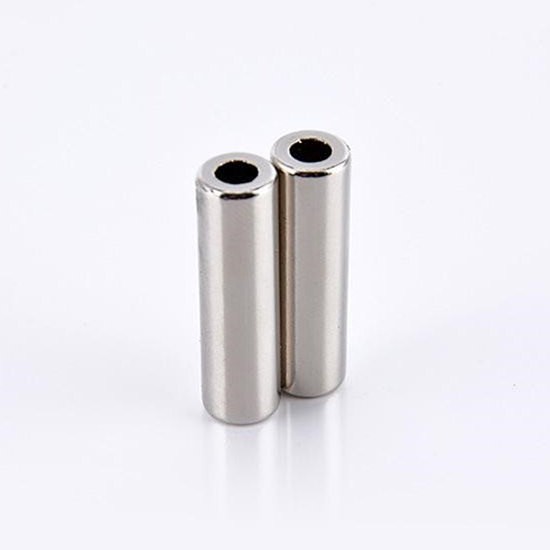
In cylindrical magnets, coercivity plays a crucial role in determining the magnet's performance. Different types of cylindrical magnets, like Hollow Cylinder Magnets and Small Cylindrical Magnets, have varying coercivity values depending on the materials used in their production.
The most common materials for cylindrical magnets are neodymium, samarium - cobalt, and ferrite. Neodymium magnets generally have a high coercivity, which means they are very resistant to demagnetization. This makes them ideal for applications where a strong and stable magnetic field is required over a long period. For example, in electric motors, neodymium cylindrical magnets can maintain their magnetization even under high - speed rotation and the presence of other magnetic fields.
Samarium - cobalt magnets also have high coercivity and excellent temperature stability. They can operate at higher temperatures compared to neodymium magnets without losing their magnetization. This property makes samarium - cobalt cylindrical magnets suitable for aerospace and high - temperature industrial applications.
On the other hand, ferrite magnets have relatively low coercivity. They are less expensive but also less resistant to demagnetization. Ferrite cylindrical magnets are often used in applications where cost is a major concern and the magnetic field requirements are not extremely high, such as in some consumer electronics.
Why is Coercivity Important?
Stability in Applications
The stability of a magnet is of utmost importance in many applications. For instance, in magnetic sensors, a stable magnetic field is necessary to ensure accurate measurements. A cylindrical magnet with high coercivity will maintain its magnetic properties over time, reducing the need for frequent calibration or replacement of the sensor.
Similarly, in magnetic separators used in industries like mining and food processing, the ability of the magnet to resist demagnetization is crucial. These separators rely on the magnetic force to remove ferrous impurities from the material being processed. If the magnet's coercivity is low, it may lose its magnetization over time, leading to a decrease in the separation efficiency.
Resistance to External Magnetic Fields
In today's technology - driven world, magnets are often exposed to various external magnetic fields. For example, in electronic devices, the magnetic components may be affected by the magnetic fields generated by other nearby components. A cylindrical magnet with high coercivity can withstand these external fields without significant loss of magnetization.
In the automotive industry, where there are numerous electrical and magnetic components, cylindrical magnets with high coercivity are used in sensors and actuators. These magnets need to maintain their performance despite the presence of the vehicle's electrical system and other magnetic sources.
Temperature Resistance
Temperature can have a significant impact on the magnetization of a magnet. As the temperature increases, the magnetic domains in the material become more disordered, which can lead to a decrease in magnetization. Coercivity is related to a magnet's temperature resistance. Magnets with high coercivity, such as samarium - cobalt ones, are better able to maintain their magnetization at high temperatures.
In high - temperature industrial processes, such as in furnaces or power generation plants, cylindrical magnets with high - temperature - resistant coercivity are essential. They ensure that the magnetic systems in these processes continue to function effectively, even when exposed to extreme temperatures.

How Coercivity Affects Product Selection
As a supplier of cylindrical magnets, I understand the importance of helping our customers select the right product based on their specific needs. When a customer approaches us, we ask about the application requirements, including the operating environment, the strength of the external magnetic fields, and the temperature range.
If the application requires a strong and stable magnetic field in a high - temperature environment, we would recommend samarium - cobalt cylindrical magnets. Their high coercivity and temperature stability make them a suitable choice. For applications where cost is a primary concern and the magnetic field requirements are relatively low, ferrite cylindrical magnets may be the best option.
If the application involves exposure to strong external magnetic fields, neodymium cylindrical magnets with high coercivity are a great choice. They can maintain their magnetization even in challenging magnetic environments.
Conclusion
Coercivity is a vital property of cylindrical magnets. It determines the magnet's resistance to demagnetization, which in turn affects its stability, performance in the presence of external magnetic fields, and temperature resistance. As a supplier, we offer a wide range of cylindrical magnets, including Cylindrical Permanent Magnet, Hollow Cylinder Magnets, and Small Cylindrical Magnets, with different coercivity values to meet the diverse needs of our customers.
If you are in the market for cylindrical magnets, or if you have any questions about coercivity or other magnet properties, please don't hesitate to contact us for a detailed discussion on your requirements. We are dedicated to providing you with the best - fitting magnet solutions for your applications.
References
- Buschow, K. H. J., & Flanders, D. C. (2007). Handbook of Magnetic Materials. Elsevier.
- Craik, D. J. (1995). Magnetism: Principles and Applications. Wiley.
- O'Handley, R. C. (2000). Modern Magnetic Materials: Principles and Applications. Wiley - Interscience.