




What is the magnetic permeability of a cylindrical magnet?
 Oct 03, 2025|
 The magnetic permeability of a cylindrical magnet is a fundamental property that determines how the magnet responds to an applied magnetic field and how it affects the magnetic field in its vicinity. In this blog, we'll delve into the concept of magnetic permeability, its significance for cylindrical magnets, and how it relates to the performance of these magnets in various applications. As a leading supplier of Magnet Cylindrical, we have in - depth knowledge of these magnets and their properties.
Understanding Magnetic Permeability
Magnetic permeability, denoted by the symbol μ (mu), is a measure of the ability of a material to support the formation of a magnetic field within itself. It is analogous to electrical conductivity in the context of electric fields. In a vacuum, the magnetic permeability is a constant known as the permeability of free space, μ₀, which has a value of approximately 4π × 10⁻⁷ H/m (henries per meter).
When a material is placed in a magnetic field, the magnetic permeability of the material determines how much the magnetic field is enhanced or reduced within the material compared to the field in a vacuum. For ferromagnetic materials like the ones used in most cylindrical magnets, the magnetic permeability is much greater than μ₀. This means that these materials can significantly amplify the magnetic field when they are magnetized.
Magnetic Permeability of Cylindrical Magnets
Cylindrical magnets are commonly made from ferromagnetic materials such as neodymium, samarium - cobalt, or ferrite. Each of these materials has a different magnetic permeability, which affects the strength and distribution of the magnetic field around the magnet.
Neodymium cylindrical magnets, for example, have a very high magnetic permeability due to their strong ferromagnetic properties. This allows them to produce extremely strong magnetic fields, making them ideal for applications where high magnetic strength is required, such as in motors, generators, and magnetic separators. The high magnetic permeability of neodymium magnets also means that they can be magnetized to a very high degree, resulting in a more powerful and efficient magnet.
Samarium - cobalt cylindrical magnets also have high magnetic permeability, although not as high as neodymium magnets in some cases. They are known for their excellent temperature stability and corrosion resistance, which makes them suitable for use in harsh environments. Their magnetic properties are maintained over a wide range of temperatures, making them a popular choice for aerospace and high - temperature applications.
Ferrite cylindrical magnets, on the other hand, have a relatively lower magnetic permeability compared to neodymium and samarium - cobalt magnets. However, they are much less expensive and have good electrical insulation properties. They are commonly used in applications such as speakers, refrigerator magnets, and small motors where cost is a major consideration.
Measuring Magnetic Permeability
The magnetic permeability of a cylindrical magnet can be measured using various techniques. One common method is to use a magnetometer to measure the magnetic field strength both inside and outside the magnet. By comparing these measurements and using the appropriate equations, the magnetic permeability of the magnet can be calculated.
Another method involves using a solenoid. A solenoid is a coil of wire that produces a uniform magnetic field when an electric current is passed through it. By placing the cylindrical magnet inside the solenoid and measuring the change in the magnetic field, the magnetic permeability of the magnet can be determined.

Significance of Magnetic Permeability in Applications
The magnetic permeability of a cylindrical magnet plays a crucial role in its performance in different applications.
In magnetic separators, for instance, the high magnetic permeability of neodymium cylindrical magnets allows them to attract and separate magnetic particles from non - magnetic materials more effectively. The strong magnetic field generated by these magnets can pull even small magnetic particles out of a mixture, improving the efficiency of the separation process.
In motors and generators, the magnetic permeability of the magnets affects the torque and power output. Higher magnetic permeability means stronger magnetic fields, which can result in greater torque and more efficient energy conversion. This is especially important in high - performance motors and generators where every bit of efficiency matters.
In magnetic sensors, the magnetic permeability of the cylindrical magnet influences the sensitivity of the sensor. A magnet with a higher magnetic permeability can produce a stronger magnetic field, which can be detected more easily by the sensor, leading to more accurate and reliable measurements.
Our Range of Cylindrical Magnets
As a supplier of Cylinder Shape Magnet, we offer a wide variety of cylindrical magnets with different magnetic permeabilities to meet the diverse needs of our customers. Whether you need a high - strength neodymium magnet for a demanding industrial application or a cost - effective ferrite magnet for a consumer product, we have the right solution for you.
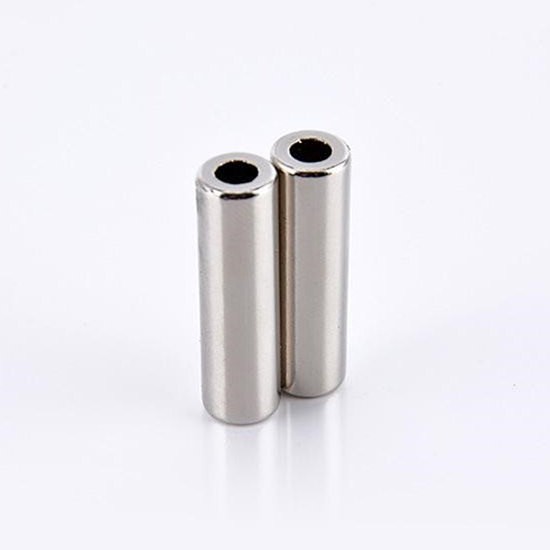
Our Hollow Cylinder Magnets are also very popular. These magnets have a unique design that allows for the passage of fluids or other objects through the center while still providing a strong magnetic field. They are used in applications such as flow meters, magnetic couplings, and some specialized medical devices.
Contact Us for Your Cylindrical Magnet Needs
If you are in the market for high - quality cylindrical magnets, we invite you to contact us. Our team of experts can help you select the right magnet with the appropriate magnetic permeability for your specific application. We can also provide customized solutions to meet your unique requirements. Whether you need a small quantity for a prototype or a large volume for mass production, we have the capacity and expertise to serve you.
References
- "Introduction to Magnetic Materials" by Charles Kittel.
- "Magnetism and Magnetic Materials" by David Jiles.
- Various technical documents from magnet manufacturers and research institutions.