




What materials are used to make speaker magnets?
 Jun 16, 2025|
 What materials are used to make speaker magnets?
Speaker magnets play a crucial role in the performance of audio speakers. They are responsible for creating the magnetic field that interacts with the electrical current in the speaker's voice coil, causing the diaphragm to vibrate and produce sound. As a speaker magnet supplier, I have in - depth knowledge of the various materials used to make these essential components.
Ferrite Magnets
Ferrite magnets, also known as ceramic magnets, are one of the most commonly used materials for speaker magnets. They are made from a combination of iron oxide (Fe₂O₃) and other metallic elements such as barium or strontium.
The manufacturing process of ferrite magnets involves mixing the raw materials, pressing them into the desired shape, and then sintering them at high temperatures. This results in a hard, brittle magnet with a relatively high resistance to demagnetization.
One of the main advantages of ferrite magnets is their cost - effectiveness. They are relatively inexpensive to produce, making them a popular choice for mass - market speakers. Additionally, ferrite magnets have good corrosion resistance, which means they can withstand harsh environmental conditions without losing their magnetic properties.
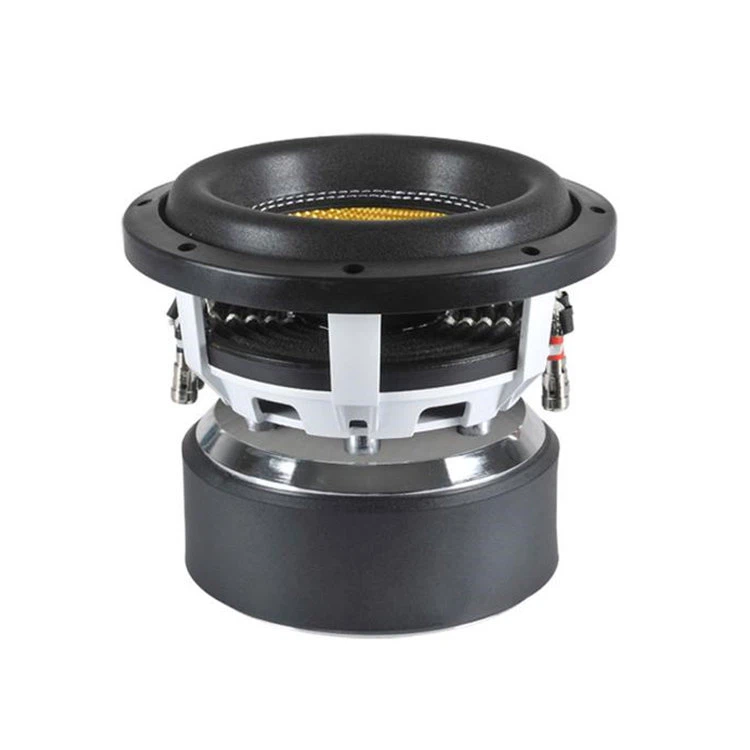
Ferrite magnets are commonly used in a variety of speaker applications, including Subwoofer Impulse Triple Magnet. Subwoofers require strong, stable magnetic fields to reproduce low - frequency sounds accurately, and ferrite magnets can provide the necessary magnetic force at a reasonable cost.
Another application is Woofer Magnet. Woofers are responsible for reproducing mid - to low - frequency sounds, and ferrite magnets offer a good balance between performance and cost for these types of speakers.
Neodymium Magnets
Neodymium magnets are a type of rare - earth magnet made from an alloy of neodymium (Nd), iron (Fe), and boron (B). They are known for their extremely high magnetic strength, which is much stronger than that of ferrite magnets.
The manufacturing process of neodymium magnets is more complex than that of ferrite magnets. It involves melting the raw materials in a vacuum or inert gas environment, followed by rapid cooling to form a fine - grained microstructure. The magnets are then machined into the desired shape and coated to protect them from corrosion.
One of the main advantages of neodymium magnets is their high magnetic energy product. This means that they can produce a very strong magnetic field in a relatively small and lightweight package. As a result, speakers using neodymium magnets can be made smaller and lighter without sacrificing performance.
Neodymium magnets are often used in high - end speakers, such as 10 Inch Speaker Magnet. These speakers require a strong magnetic field to reproduce high - quality sound accurately, and neodymium magnets can provide the necessary performance in a compact design.
However, neodymium magnets also have some disadvantages. They are more expensive than ferrite magnets, mainly due to the high cost of the rare - earth elements used in their production. Additionally, neodymium magnets are more brittle and prone to corrosion, which requires careful handling and proper coating during the manufacturing process.
Samarium - Cobalt Magnets
Samarium - cobalt (SmCo) magnets are another type of rare - earth magnet. They are made from an alloy of samarium (Sm) and cobalt (Co), along with other elements such as iron, copper, and zirconium.
Samarium - cobalt magnets have several advantages. They have a very high Curie temperature, which means they can maintain their magnetic properties at high temperatures. This makes them suitable for applications where the speaker may be exposed to heat, such as in automotive or professional audio systems.
They also have excellent corrosion resistance and are less prone to demagnetization compared to neodymium magnets. However, like neodymium magnets, samarium - cobalt magnets are relatively expensive due to the use of rare - earth elements.

Alnico Magnets
Alnico magnets are made from an alloy of aluminum (Al), nickel (Ni), and cobalt (Co), along with other elements such as iron. They were one of the first types of permanent magnets to be developed and were widely used in speakers in the past.
Alnico magnets have a unique combination of magnetic properties. They have a relatively high remanence, which means they can retain a strong magnetic field even after being magnetized. They also have a low coercivity, which makes them easier to magnetize and demagnetize compared to other types of magnets.
Alnico magnets are known for their warm, rich sound quality. They are often used in vintage - style speakers and high - end guitar amplifiers, where the unique sonic characteristics are highly valued. However, alnico magnets are relatively heavy and are not as strong as neodymium or samarium - cobalt magnets, which limits their use in some modern speaker designs.
Comparison of Materials
When choosing the material for a speaker magnet, several factors need to be considered. Cost is an important factor, especially for mass - market speakers. Ferrite magnets are the most cost - effective option, while rare - earth magnets such as neodymium and samarium - cobalt are more expensive.
Performance is another crucial factor. Neodymium magnets offer the highest magnetic strength in a small package, making them ideal for high - performance speakers. Ferrite magnets provide a good balance between performance and cost, while alnico and samarium - cobalt magnets have unique properties that make them suitable for specific applications.
Size and weight are also important considerations. Neodymium magnets allow for smaller and lighter speaker designs, which is beneficial for portable and compact speakers.
Conclusion
In conclusion, there are several materials available for making speaker magnets, each with its own advantages and disadvantages. As a speaker magnet supplier, I understand the importance of choosing the right material for each application. Whether it's the cost - effective ferrite magnets for mass - market speakers, the high - performance neodymium magnets for high - end audio systems, or the unique - sounding alnico magnets for vintage - style speakers, we have the expertise to provide the best solution for your needs.
If you are in the market for speaker magnets and want to discuss your specific requirements, please feel free to contact us. We are committed to providing high - quality products and excellent customer service. Our team of experts can help you select the most suitable magnet material and design for your speaker application, ensuring optimal performance and cost - effectiveness.
References
- "Permanent Magnet Materials and Their Application" by E. C. Stoner and E. P. Wohlfarth
- "Handbook of Magnetic Materials" edited by K. H. J. Buschow