




Can a Super Magnetic Ring attract metal objects?
 Aug 06, 2025|
 Hey there! As a supplier of Super Magnetic Rings, I often get asked this question: "Can a Super Magnetic Ring attract metal objects?" Well, let's dive right into it and find out.
First off, let's understand what a Super Magnetic Ring is. You can check out more details about it on this page: Super Magnetic Ring. These rings are made from powerful magnetic materials, usually neodymium, which is known for its strong magnetic properties.
Now, to answer the big question: yes, a Super Magnetic Ring can attract metal objects. But it's not as simple as just saying "it attracts all metals." You see, not all metals are magnetic. There are three main types of metals when it comes to magnetism: ferromagnetic, paramagnetic, and diamagnetic.
Ferromagnetic metals are the ones that are strongly attracted to magnets. These include iron, nickel, and cobalt. If you have a Super Magnetic Ring and you bring it close to an object made of iron, like a nail or a paperclip, you'll see it get pulled right towards the ring. It's like magic! The magnetic field of the Super Magnetic Ring creates a force that attracts the ferromagnetic metal, causing it to move.
Paramagnetic metals are also attracted to magnets, but the attraction is much weaker. Metals like aluminum and platinum fall into this category. You might not notice a significant pull with a regular - strength magnet, but a Super Magnetic Ring can still have a detectable effect. The magnetic field of the ring aligns the magnetic moments of the atoms in the paramagnetic metal, creating a weak attraction.
On the other hand, diamagnetic metals are actually repelled by magnets. Copper, silver, and gold are diamagnetic. So, if you try to use a Super Magnetic Ring to attract a copper coin, it won't work. In fact, the ring will push the copper coin away, although the force is usually very small.
The strength of the attraction between a Super Magnetic Ring and a metal object depends on several factors. One of the most important factors is the distance between the ring and the object. The closer the object is to the ring, the stronger the magnetic force. As you move the object further away, the force decreases rapidly. It follows an inverse - square law, which means that if you double the distance between the ring and the object, the magnetic force becomes four times weaker.
Another factor is the size and shape of the Super Magnetic Ring. A larger ring with more magnetic material will generally have a stronger magnetic field and can attract metal objects from a greater distance. Also, the way the ring is magnetized matters. For example, a Diametrically Magnetized Ring Magnet has a different magnetic field pattern compared to a regular ring magnet, which can affect its ability to attract metal objects.
The purity of the metal object also plays a role. If an object is made of a mixture of metals, its magnetic properties can be more complex. For instance, if a metal alloy contains a small amount of ferromagnetic metal along with non - magnetic metals, the overall object might still be attracted to the Super Magnetic Ring, but the attraction might be weaker than if it were made of pure ferromagnetic metal.
Now, let's talk about some real - world applications of Super Magnetic Rings and their ability to attract metal objects. In the manufacturing industry, these rings are used in sorting machines. They can quickly separate ferromagnetic metals from non - magnetic materials, which is very useful for recycling and waste management. For example, in a recycling plant, a conveyor belt with Super Magnetic Rings can pick out iron and steel objects from a mix of different materials.
In the electronics industry, Super Magnetic Rings are used in sensors. They can detect the presence of metal objects by measuring the change in the magnetic field when a metal object gets close. This is used in things like door sensors and proximity sensors.
In the medical field, magnetic rings are used in some diagnostic tools. For example, in magnetic resonance imaging (MRI), strong magnetic fields are used to create detailed images of the inside of the body. Although the magnetic rings used in MRI are much more complex and powerful than our Super Magnetic Rings, the basic principle of magnetism attracting certain materials is the same.
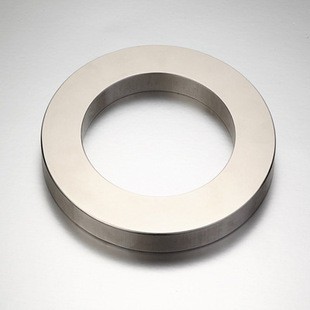

If you're in the market for a Super Magnetic Ring, we also have the Magnet Source Neodymium Magnet Ring. It's another great option with its own unique set of features and applications.
So, if you're interested in using Super Magnetic Rings for your business or project, whether it's for sorting, sensing, or any other application, I'd love to have a chat with you. Just reach out, and we can discuss your specific needs and how our Super Magnetic Rings can meet them. We have a wide range of sizes and strengths available, and we can even customize the rings to fit your exact requirements.
In conclusion, a Super Magnetic Ring can definitely attract metal objects, but it all depends on the type of metal, the distance, and other factors. Its ability to attract ferromagnetic and paramagnetic metals makes it a versatile tool with many practical applications. Don't hesitate to contact us if you want to learn more or start a purchase.
References:
- "Introduction to Magnetism and Magnetic Materials" by David Jiles
- "Magnetism: A Very Short Introduction" by Stephen J. Blundell