




Can cylindrical magnets be used in high - pressure environments?
 May 20, 2025|
 As a supplier of Magnet Cylindrical, I've been frequently asked whether cylindrical magnets can be used in high - pressure environments. This question is of great significance, especially for industries where high - pressure conditions are common, such as deep - sea exploration, high - pressure chemical reactors, and aerospace. In this blog, I'll explore this topic in detail, considering the properties of cylindrical magnets, the effects of high pressure on them, and practical applications.
Properties of Cylindrical Magnets
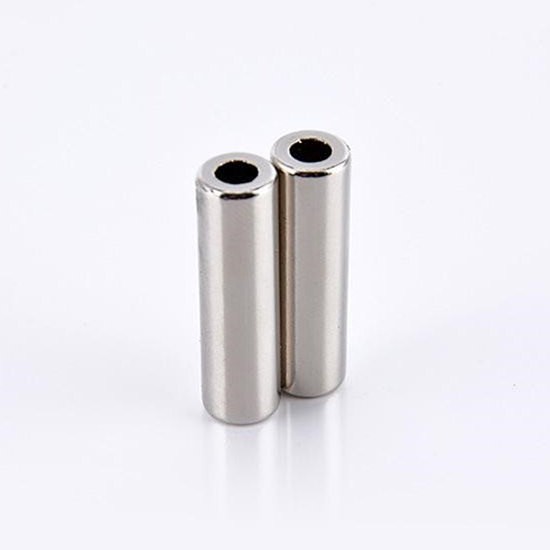
Cylindrical magnets, including Hollow Cylinder Magnets and Cylindrical Permanent Magnet, are widely used due to their unique magnetic properties. They are available in different materials, such as neodymium, samarium - cobalt, and ferrite. Neodymium cylindrical magnets, for example, are known for their high magnetic strength, which makes them suitable for applications requiring strong magnetic fields.
The magnetic field of a cylindrical magnet is relatively uniform along its axis, and it can be easily controlled by adjusting the size and shape of the magnet. The magnetization direction of a cylindrical magnet can be either axial (along the length of the cylinder) or radial (perpendicular to the axis). This flexibility in magnetization direction allows for a wide range of applications in various industries.
Effects of High Pressure on Cylindrical Magnets
When considering using cylindrical magnets in high - pressure environments, it's crucial to understand how high pressure affects their magnetic properties. High pressure can cause changes in the crystal structure of the magnetic material, which in turn can influence the magnetic behavior.

Structural Changes
Under high pressure, the atoms in the magnetic material are forced closer together. This can lead to a change in the lattice structure of the material. For some magnetic materials, such as neodymium - iron - boron, high pressure can cause a phase transition. A phase transition is a change from one crystal structure to another, which can significantly affect the magnetic properties. For example, a phase transition might result in a decrease in the magnetic coercivity, which is the ability of the magnet to resist demagnetization.
Demagnetization Risk
High pressure can also increase the risk of demagnetization. The external pressure can disrupt the alignment of the magnetic domains within the magnet. Magnetic domains are regions within the magnet where the magnetic moments of the atoms are aligned in the same direction. When these domains are disrupted, the overall magnetic field of the magnet can be weakened. The risk of demagnetization depends on the magnitude of the pressure, the duration of exposure, and the initial magnetic properties of the magnet.
Mechanical Integrity
In addition to the magnetic effects, high pressure can also pose a threat to the mechanical integrity of the cylindrical magnet. The pressure can cause the magnet to crack or fracture, especially if the magnet is not properly designed or supported. Cracks in the magnet can further lead to a loss of magnetic performance and even complete failure of the magnet in some cases.
Applications of Cylindrical Magnets in High - Pressure Environments
Despite the potential challenges, there are several applications where cylindrical magnets are used in high - pressure environments.
Deep - Sea Exploration
In deep - sea exploration, sensors and equipment often need to operate under extremely high pressures. Cylindrical magnets can be used in magnetic sensors for detecting the magnetic field variations in the ocean. For example, they can be used in magnetometers to measure the Earth's magnetic field, which can help in navigation and mapping of the ocean floor. The high - pressure environment in the deep sea requires the magnets to be able to maintain their magnetic properties and mechanical integrity. Special coatings and encapsulation techniques are often used to protect the magnets from the high - pressure seawater.
High - Pressure Chemical Reactors
In high - pressure chemical reactors, cylindrical magnets can be used in magnetic stirrers. Magnetic stirrers use the magnetic field of the magnet to rotate a stir bar inside the reactor, which helps in mixing the reactants. The high - pressure environment in the reactor requires the magnet to be resistant to chemical corrosion as well as the mechanical stress caused by the pressure. Materials like samarium - cobalt magnets are often preferred in these applications due to their high corrosion resistance and relatively stable magnetic properties under high pressure.
Aerospace Applications
In aerospace, cylindrical magnets can be used in various components, such as actuators and sensors. For example, in high - altitude flight, the components may be exposed to high - pressure changes during takeoff and landing. The magnets need to be able to withstand these pressure variations without significant loss of magnetic performance. Neodymium magnets are sometimes used in aerospace applications due to their high magnetic strength, but they need to be carefully designed and protected to ensure their reliability under high - pressure conditions.
Mitigating the Effects of High Pressure on Cylindrical Magnets
To use cylindrical magnets effectively in high - pressure environments, several strategies can be employed.
Material Selection
Choosing the right magnetic material is crucial. Different materials have different responses to high pressure. For example, samarium - cobalt magnets are generally more resistant to high - pressure - induced demagnetization compared to neodymium magnets. They also have better thermal stability, which can be an advantage in high - pressure environments where temperature changes may occur.

Design Optimization
The design of the cylindrical magnet can also play an important role in its performance under high pressure. For example, the shape and size of the magnet can be optimized to reduce the stress concentration under pressure. A thicker magnet may be more resistant to cracking, but it may also have different magnetic properties compared to a thinner one. Additionally, the magnetization direction can be carefully selected to minimize the risk of demagnetization.
Protection and Encapsulation
Using appropriate protection and encapsulation techniques can help protect the cylindrical magnet from the high - pressure environment. Coatings can be applied to the surface of the magnet to prevent corrosion and mechanical damage. Encapsulation in a strong and pressure - resistant housing can also provide additional support and protection.
Conclusion
In conclusion, cylindrical magnets, such as Magnet Cylindrical, can be used in high - pressure environments, but it requires careful consideration of the magnetic material, design, and protection. While high pressure can pose challenges to the magnetic properties and mechanical integrity of the magnets, with the right strategies, these challenges can be mitigated.
If you are looking for high - quality cylindrical magnets for your high - pressure applications, or if you have any questions about the suitability of our products, please feel free to contact us for further discussion and procurement negotiation. We are committed to providing you with the best solutions based on your specific requirements.
References
- "Magnetism and Magnetic Materials" by David Jiles.
- "High - Pressure Physics and Chemistry" by R. Jeanloz and J. A. Moriarty.
- "Aerospace Materials and Their Properties" by S. K. Singh.